How to Answer “Tell Me About Yourself” in an Interview

Most candidates lose momentum in the first two minutes of an interview—not because of a lack of experience, but because they fail to structure their answer effectively.
“Tell Me About Yourself” is not an icebreaker; it is a direct evaluation of your communication skills, professional value, and role alignment. A clear, structured response immediately positions you as a strong candidate, while a vague or unfocused answer can quickly undermine your credibility.
In this guide, you’ll learn a proven framework, see high-quality examples, and understand exactly how to deliver a concise, results-driven answer that aligns with what hiring managers expect in 2026.
How to Answer “Tell Me About Yourself”
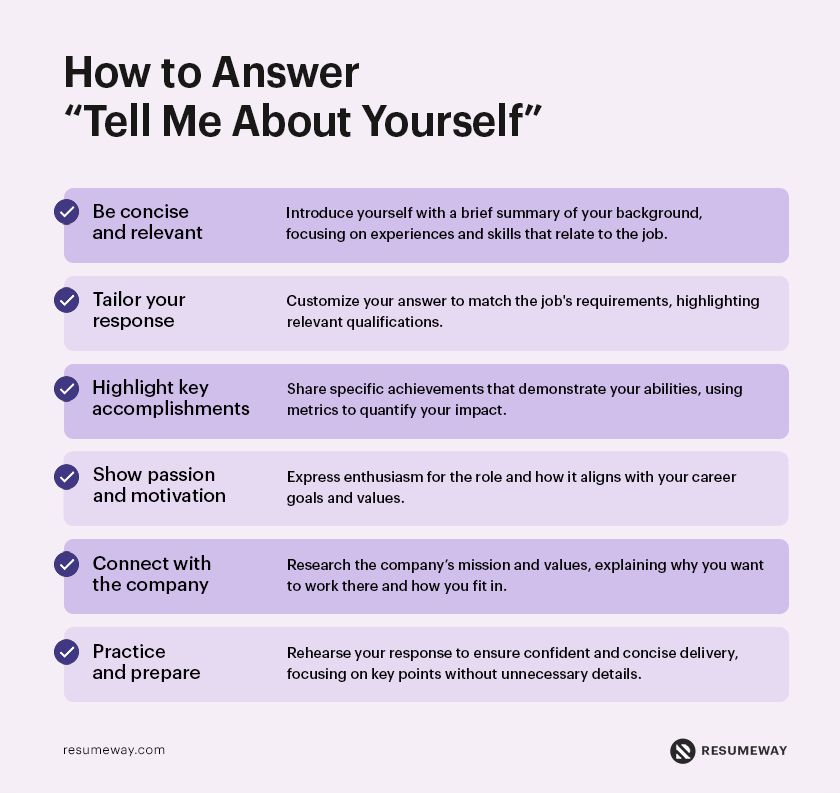
- Use the Present–Past–Future–Fit structure
- Keep your answer under 2 minutes
- Focus on results, not responsibilities
- Tailor your answer to the specific role and company
- End with a clear connection to why you’re a strong fit
How to Answer the “Tell Me About Yourself” Interview Question
A strong response should function as a professional self-introduction interview, not a personal summary. Employers expect a clear, concise overview of your experience, achievements, and career direction—delivered with structure and relevance.
The most effective approach is to treat your answer as a brief elevator pitch interview answer, focused on the value you bring to the role. Using a proven interview answer structure ensures your response remains focused, impactful, and easy to follow.
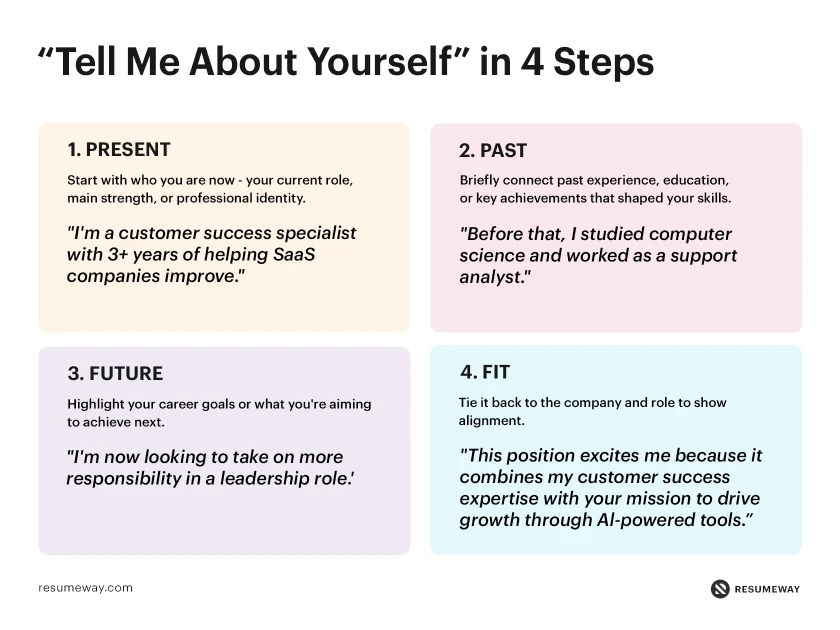
Step 1: Present – Current Role and Expertise
Start with your current role and core area of expertise. This is the foundation of your job interview introduction sample, helping the interviewer quickly understand your professional identity. If you’re unsure how to introduce yourself professionally, focus on what you do now, your area of specialization, and the value you deliver.
“I’m a customer success specialist with over three years of experience helping SaaS companies improve retention and customer satisfaction.”
Common mistakes we see candidates make
- Turning it into a life story
- Listing responsibilities instead of results
- Forgetting to connect the answer to the role
Step 2: Past – Key Experience and Skills
Briefly highlight relevant experience or achievements that support your current role. A strong interview introduction example includes specific, relevant background that reinforces your qualifications.
“Before that, I studied computer science and worked as a support analyst, where I built a strong foundation in technical problem-solving.”
Expert Insight: In our work with hiring managers, the most common reason candidates underperform on this question is lack of structure—not lack of experience. Even highly qualified professionals often fail to clearly communicate their value in the first 60 seconds.
Step 3: Future – Career Goals and Growth
Explain your career direction and how it aligns with the role. This adds purpose to your professional self-introduction interview and demonstrates long-term motivation.
“I’m now looking to take on more responsibility and grow into a leadership role within customer success.”
Step 4: Fit – Alignment With the Role
Conclude by connecting your background to the company and role. A well-structured job interview introduction sample always ends with a clear value proposition and alignment.
“This role stood out to me because it combines my customer success background with your mission to drive growth through AI-powered tools.”
Common mistakes we see candidates make
Another common issue we see is answers that sound overly rehearsed. Candidates sometimes memorize their response word for word, which can come across as stiff or insincere. Interviewers respond far better to answers that feel prepared but conversational—clear, confident, and flexible enough to adapt naturally to the flow of the interview.
Related: Examples of Strengths and Weaknesses for Job Interviews 2025
Good vs Bad “Tell Me About Yourself” Answers
❌ A weak answer example
“I’ve worked in a few different roles over the years and have experience in many areas. I’m a hard worker, a team player, and I always try my best to meet deadlines. I’m looking for an opportunity where I can grow and contribute to a great company.”
Why this falls short:
This answer is vague, generic, and unfocused. It doesn’t highlight specific experience, achievements, or explain why the candidate is a good fit for the role.
✅ A strong answer example
“I’m currently a marketing specialist with five years of experience in digital campaigns and content strategy. In my current role, I led a campaign that increased website traffic by 30% within six months. I enjoy working on data-driven projects, and this role stood out to me because it aligns closely with my experience in growth-focused marketing and cross-functional collaboration.”
Why this works:
This answer is concise, specific, and results-focused. It clearly connects the candidate’s background to the role, making it easy for the interviewer to see the fit.
Best Answers for “Tell Me About Yourself”
When answering the “Tell Me About Yourself” interview question, it’s important to provide a concise and relevant response that highlights your qualifications and experiences. Here are a few examples to give you an idea:
Example 1 : Teacher
Example 2: Project manager
Related: Project manager resume examples & templates
Example 3: Computer science specialist
Related: Computer science specialist resume examples & templates
“Tell Me About Yourself” Sample Answers for Experienced
Example 4: Registered nurse (RN)
Related: Registered nurse resume examples & templates
Example 5: Account executive
“I’m an accomplished account executive with a proven track record of driving revenue growth through strategic client relationships and innovative solutions. With over 8 years of experience in the industry, I’ve honed my expertise in identifying client needs and delivering tailored solutions that exceed expectations. My ability to build and maintain long-term partnerships has consistently resulted in increased client satisfaction and retention. I thrive in fast-paced, dynamic environments and am adept at navigating complex sales cycles. I’m passionate about leveraging my skills to drive business success and am excited about the opportunity to contribute to your team’s growth and success.”
Example 6: Creative director
Related: Creative director resume examples, templates
Example 7: Real estate attorney
From our experience working with job seekers across industries, top-performing candidates consistently focus on measurable results (e.g., revenue growth, efficiency improvements, or project outcomes) rather than listing responsibilities.
Related: Attorney resume examples & templates
Examples of “Tell Me About Yourself” Answers for Freshers
Example 8: College student
“I graduated from Holmes University in September with a strong passion for event planning. During high school, I organized a prom that had record attendance and came in 15% under budget. While studying, I worked part-time at a local animal shelter, managing fundraising events and social media, which helped increase our donations and followers. To expand my skills, I also completed a business administration course to better understand the business side of event planning. Now, I’m excited to bring my experience and enthusiasm to your team and help create impactful events.”
Example 9: Candidates with no experience
Related: How to write a resume with no work experience
Additional Sample Answers for Unique Career Situations
Examples for career changer with transferable skills
Sales to Digital Marketing
Example:
“I’ve spent eight years in sales, building strong client relationships and understanding market trends. As the digital landscape evolved, I became passionate about leveraging digital platforms to engage audiences. I recently completed a certification in digital marketing and led a project that increased online engagement by 25%. I’m excited to apply my customer-centric mindset to create impactful marketing campaigns in this new role.”
Teaching to Corporate Training
Example:
“After 10 years as a high school teacher, I decided to transition to corporate training. My experience in curriculum design and creating engaging learning environments has prepared me to develop effective training programs for professionals. I’m passionate about empowering employees to grow their skills and contribute to organizational success.”
Returning to Work After a Career Break
Returning After Parental Leave
Example:
“After taking a four-year break to focus on raising my family, I’m excited to re-enter the workforce and apply my expertise in project management. During my time away, I stayed current by earning a certification in Agile methodologies and volunteering as a project coordinator for local community events. These experiences further strengthened my organizational and leadership skills, which I’m eager to bring to your team.”
Returning After a Personal Health Break
Example:
“Following a two-year break to prioritize my health, I’m ready and energized to return to my career in software development. During this time, I completed advanced courses in cloud computing and contributed to open-source projects to stay updated with industry trends. I’m excited to bring my enhanced skills and renewed focus to develop innovative solutions for your company.”
Related: List of 20+ Strengths for a Job Interview [With Examples]
Common Mistakes to Avoid
When answering the “tell me about yourself” interview question, it’s important to avoid common mistakes that can hinder your chances of making a positive impression. Here are some common mistakes to avoid:
- Rambling or sharing irrelevant information: Keep your response focused and concise. Avoid going into unnecessary details or sharing personal information that is not relevant to the job or the interview.
- Providing a generic or vague response: Tailor your answer to the specific job and company you are interviewing for. Avoid using generic statements that could apply to anyone. Instead, highlight your unique qualifications and experiences that make you a strong fit for the role.
- Sharing too much personal information: While it’s important to show some personality, be cautious about oversharing personal details. Stick to professional information and avoid discussing personal matters that are unrelated to the job.
- Negativity or self-deprecation: Avoid speaking negatively about past employers, colleagues, or experiences. Stay positive and focus on highlighting your strengths and achievements.
In practice, we frequently see candidates rely on generic statements like “hardworking” or “team player” without supporting evidence. These responses rarely differentiate candidates in competitive hiring processes.
Related: 30+ Common Job Interview Questions & Answers in 2025
FAQ
Why do interviewers ask, “Tell Me About Yourself” in interviews?
Interviewers ask this to see how well you can summarize your professional background, highlight key achievements, and align your skills with the role. It also helps them assess your communication style and confidence.
How long should my “Tell Me About Yourself” answer be in an interview?
Keep your response between 1 to 2 minutes. This allows you to share important details without overwhelming the interviewer with too much information.
How to answer “Tell Me About Yourself” for 2 years experience?
To answer “Tell Me About Yourself” with 2 years of experience, start by briefly introducing yourself and your current role. Highlight key responsibilities and 1-2 significant achievements. Conclude by connecting your skills to the job you’re applying for, showing how your experience aligns with the role’s requirements. Keep it concise, focused, and relevant to the position.
How should I end my answer?
Conclude by tying your background to the job you’re applying for. You can say something like, “That’s a bit about my background. I’m really excited about this role because it aligns perfectly with my experience in [relevant field] and my passion for [specific aspect of the job].
You may also be interested in:
 Privacy Protected
Get a Free Expert Resume Review
file here or click to upload
Thank You