
Types of Resumes: The Best Formats to Stand Out in 2025

Struggling to get noticed by employers? Your resume format might be the reason your application gets overlooked. With evolving hiring trends and advanced ATS (Applicant Tracking System) filters, choosing the right resume type is crucial for standing out. This guide will help you select the best format for your career goals, ensuring your resume grabs attention in 2025.
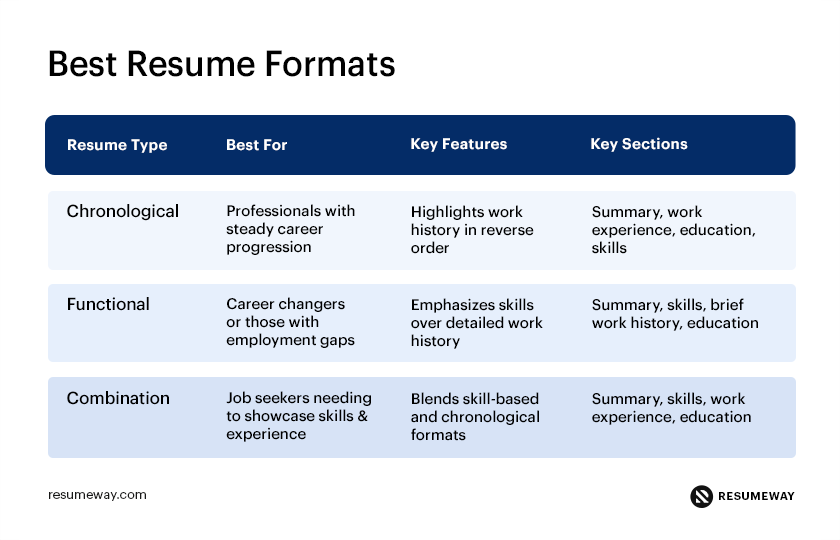
Main types of resumes
Below are the three primary resume types, with the pros and cons of each to help you decide which type of resume is best for you.
Chronological Resume
A chronological resume highlights your work experience in reverse chronological order, starting with your most recent job. This format emphasizes your career progression, showcasing your job titles, responsibilities, and achievements over time. Unlike a functional resume, which focuses on skills, a chronological resume provides a clear timeline of your employment history, including specific dates and company names.
Best for: Individuals with a steady work history in the same industry, as it demonstrates growth and stability to potential employers.
Pros:
- Clearly showcases career progression and growth
- Preferred by recruiters and hiring managers
- Easily passes ATS screening due to its structured format
Cons:
- Highlights employment gaps
- Not ideal for career changers or those with limited work experience
Functional Resume
A functional resume emphasizes your skills rather than your work experience. For example, if you have studied human resources or received training in the field, your resume may begin by highlighting relevant skills such as recruitment and communication. Unlike a chronological resume, which focuses on employment history and job responsibilities, a functional resume prioritizes your abilities and may omit specific dates related to work experience. This format provides employers with insight into the value you can bring to the company.
Best for: Career changers, recent graduates, and those with employment gaps.
Pros:
- Focuses on transferable skills rather than job history
- Ideal for applicants with gaps in employment or limited experience
- Highlights relevant abilities for career changers
Cons:
- Can appear vague or raise red flags for employers
- May not pass ATS screening as effectively as a chronological resume
Combination Resume
A combination resume blends elements of both chronological and functional resumes, emphasizing both skills and work experience. It typically begins with a section highlighting key skills and qualifications, followed by a detailed work history in reverse chronological order. Unlike a purely functional resume, which focuses mainly on skills, or a chronological resume, which prioritizes work experience, a combination resume allows job seekers to showcase their expertise while also demonstrating a clear career progression.
Best for: Professionals with a strong skill set and relevant work experience, such as career changers or those with diverse backgrounds.
Pros:
- Showcases both skills and work history effectively
- Provides a comprehensive view of qualifications
- Ideal for career changers and professionals with varied experience
Cons:
- Can be longer and more complex
- Requires careful formatting to be ATS-friendly
Read more: Best Resume Format for 2025 [Pros vs Cons]
Creative and alternative types of resumes
Infographic Resume
An infographic resume uses visuals like icons, charts, and creative layouts to highlight qualifications. It is ideal for design and marketing roles, as it enhances personal branding. However, it may not be ATS-friendly, so it is best used as a supplement to a standard resume.
Video Resume
A video resume showcases personality, communication skills, and qualifications in a recorded format. Suited for media, sales, and public-facing roles, it creates a strong first impression but works best alongside a traditional resume.
Portfolio Resume
A portfolio resume integrates a traditional resume with work samples, making it ideal for creative and project-based fields. It provides direct evidence of skills and achievements, offering a tangible showcase of expertise.
Specialized types of resumes
Targeted Resume
A targeted resume tailors skills and experience to a specific job, emphasizing only relevant qualifications. It improves ATS compatibility and attracts recruiters’ attention, making it ideal for competitive roles.
Curriculum Vitae (CV)
A CV details academic and professional achievements, including education, research, and publications. Used in academia, research, and international job markets, it provides a comprehensive career overview.
Federal Resume
A federal resume follows U.S. government job requirements, outlining work history, specialized qualifications, and GS levels. It ensures compliance with strict federal hiring guidelines.
Read more: Tips for an Eye-Catching Resume
Choosing the right type of resume
Choosing the best resume format depends on your work history, skill set, and career goals. Decide whether you want to emphasize experience, skills, or both to align with your target job.
- Chronological Resume – Best for professionals with a stable career path, highlighting work experience and progression.
- Functional Resume – Ideal for career changers, recent graduates, or those with employment gaps, focusing on skills rather than job history.
- Combination Resume – A balanced approach that showcases both relevant experience and key skills.
- Industry-Specific Formats – Creative roles may benefit from infographic or portfolio resumes, while academic and government positions typically require a CV or federal resume.
Whichever format you choose, ensure it’s ATS-friendly with clear headings, structured content, and relevant keywords.
Read more: 20+ Best Microsoft Word Resume Templates for 2025
FAQ
Do employers prefer certain types of resumes over others?
Employers often prefer a chronological resume for its clear career progression, but preferences can vary by industry.
What is the best resume format for fresher?
The best resume format for a fresher is a functional resume as it highlights skills, education, and projects instead of work experience. A combination resume can also work if the candidate has internships or volunteer experience to showcase.
What’s the difference between a resume and a CV?
A resume is a concise summary of your work experience, while a CV is a detailed document listing your academic achievements and professional history.
Are there industry-specific types of resumes?
Yes, certain industries require specialized types of resumes:
- Federal Resume – For U.S. government jobs, with strict format requirements.
- Academic CV – Used in education, research, and science fields.
- Technical Resume – Focuses on IT, engineering, and programming skills.
Popular related posts:
- 4 Steps for Answering “Why Do You Want to Work Here?”
- “Tell Me About Yourself” Tips and Example Answers
- 41+ Behavioral Interview Questions and Answers
- How to Answer “Why Are You Leaving Your Current Job?”
 Privacy Protected
Get a Free Expert Resume Review
file here or click to upload
Thank You