
Job Interview Outfits: How to Make a Great First Impression [2026]
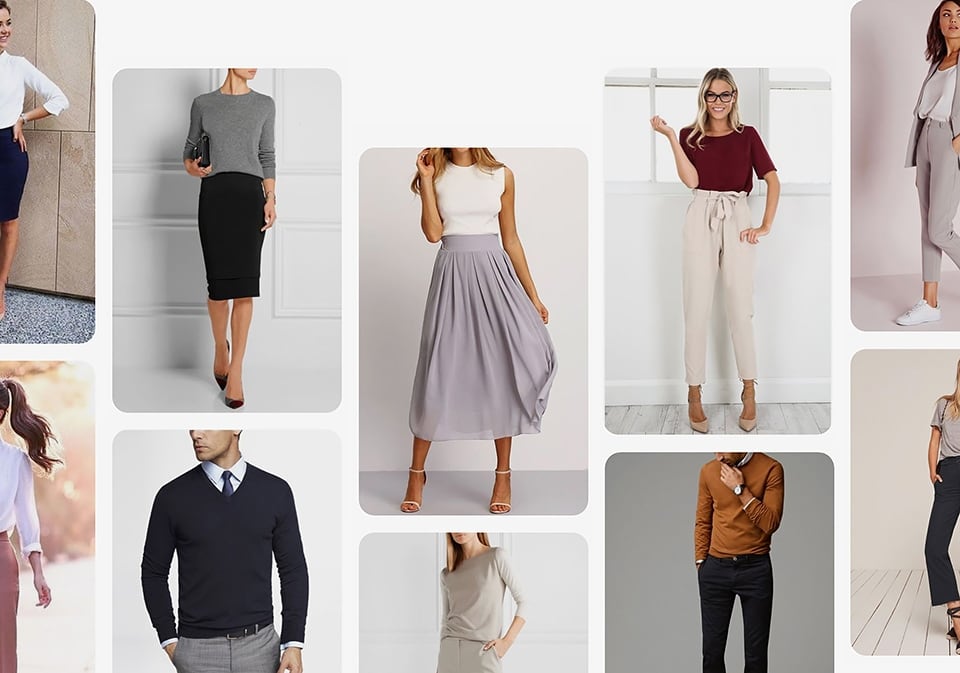
For most job interviews, wear clean, well-fitting clothing that is one level more polished than the employer’s everyday dress code.
A navy or charcoal suit remains the safest choice for law, finance, executive and other traditionally formal roles.
Business-casual interviews usually call for tailored trousers or a professional dress, a blouse or collared shirt, and clean, polished shoes.
Startup, creative and skilled-trade interviews can support smart-casual clothing, but company photos or recruiter guidance should determine the final level of formality.
Virtual interviews require the same preparation as in-person meetings, with solid colors, tidy grooming, clear lighting and a distraction-free background.
A 2026 meta-analysis found that first impressions formed within one minute correlated with later work-related outcomes at ρ=.48 across 28 samples and 5,239 observations.
TL;DR: What to wear to a job interview
- Research the employer’s normal dress code and go approximately one level more polished.
- Choose a suit for formal, senior, legal and financial roles.
- Choose business casual for most office interviews.
- Choose smart casual only when the employer’s culture supports it.
- Prioritize fit, cleanliness, comfort and grooming over expensive brands.
- Ask the recruiter when the expected dress code remains unclear.
| Interview context | Safest default | Appropriate adjustment |
| Finance, law or executive | Navy or charcoal suit | Conservative shirt, blouse, tie or accessories |
| Typical office role | Business casual | Blazer, tailored trousers, skirt or simple professional dress |
| Startup or creative role | Polished smart casual | Dark jeans or clean minimal sneakers only when company culture supports them |
| Retail or hospitality | Polished version of workplace attire | Choose clothing appropriate for customer contact |
| Skilled trade | Clean, job-relevant clothing | Clean boots and a collared shirt rather than office formalwear |
| Virtual interview | Same formality as an in-person interview | Solid colors, uncluttered background and front-facing light |
Why Job Interview Outfits Matter for First Impressions
Interview clothing can influence how a candidate is perceived, but it does not determine the hiring decision. A study of 109 marketing and banking respondents found that clothing affected perceptions of management characteristics and hiring recommendations. Because the 1990 experiment evaluated only four women applying for a management position, the findings indicate possible influence rather than a universal rule. (Forsythe, Journal of Applied Social Psychology)
Choose clean, comfortable and properly fitting clothes that keep attention on your qualifications rather than your appearance.
Job Interview Outfits: How to Dress for Success
Match your outfit to the employer’s culture, the role’s seniority and the amount of client contact involved.
- Research the company: Check the employer’s website, careers page, LinkedIn profile and employee photos. If the dress code remains unclear, ask the recruiter and dress slightly more formally than employees typically do. Suits are no longer the default for every interview, according to recruiters and stylists interviewed by the Associated Press in August 2026. (Associated Press, 2026)
- Choose the right formality: Wear a suit or structured dress for formal corporate roles and polished business-casual or smart-casual clothing for more relaxed workplaces.
- Use dependable colors: Navy, black, gray, beige and white are easy choices for formal interviews. Muted accent colors and subtle patterns can work in creative or casual environments.
- Check fit and grooming: Make sure every item is clean, comfortable and wrinkle-free, and avoid strong fragrances.
- Finish the outfit carefully: Choose clean shoes and minimal accessories that will not distract during the conversation.
Related: Best Job Interview Hairstyles for Women
Interview Outfits for Women
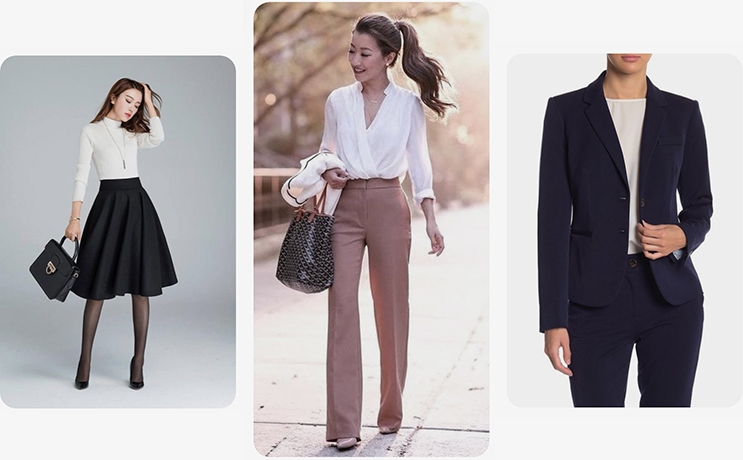
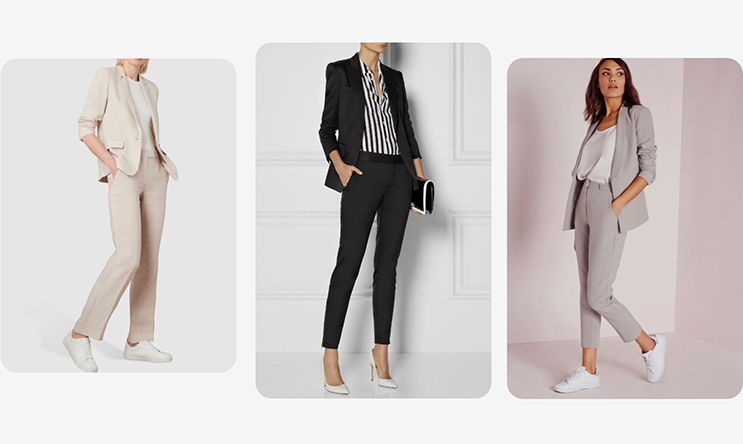
Women have a range of professional options for job interview outfits. Polished combinations include suits, blouses with skirts, or tailored slacks with blazers.
- Blazers: A navy blazer is versatile and pairs well with a blouse, button-down shirt, dress, khakis, or dark jeans for a casual look.
- Shirts and Blouses: A plain button-down is a safe, professional choice. For variety, try subtle colors or different fabrics. An elegant blouse works well with pencil skirts or tailored pants.
- Pants: Invest in well-fitting black or neutral trousers. Pair with a blazer, cardigan, or lightweight sweater for a polished winter look.
- Dresses: Statement dresses or a classic black dress can create a feminine, professional look. Hemlines should skim the knees and necklines should remain modest. Pair dresses with tights and closed-toe shoes for a complete interview-ready outfit.
- Accessories and Details: Minimal jewelry, clean shoes, and subtle makeup help maintain a professional appearance.
For additional inspiration, search social media tags like #JobInterviewOutfitsWomen
Interview Outfits for Plus-Size Women
Plus-size candidates should follow the same interview-dress principles as every other candidate: choose clothing that is comfortable, properly fitted, appropriate for the role and consistent with the employer’s level of formality.
- Prioritize comfort and fit: Choose clothing that allows you to sit, stand and move comfortably without pulling, slipping or requiring frequent adjustment.
- Build around reliable pieces: Tailored trousers, structured skirts, professional dresses, blouses, button-down shirts, cardigans and blazers can all work when they fit comfortably.
- Choose colors and patterns confidently: Neutral colors are easy to coordinate, but candidates do not need to avoid black, bright colors, stripes or patterns solely because of body size.
- Consider tailoring: Minor adjustments to sleeve, trouser or jacket length can improve comfort and create a more polished fit.
- Test the complete outfit: Sit down, walk, raise your arms and check the outfit under natural light before the interview.
Professional interview clothing should support confidence and mobility rather than hide or visually reshape a candidate’s body.
For more inspiration, explore #JobInterviewOutfitsWomenPlusSize.

Interview Outfits for Men
Men have a variety of professional options for job interview outfits. Choosing well-fitted, versatile pieces ensures a polished and confident appearance.
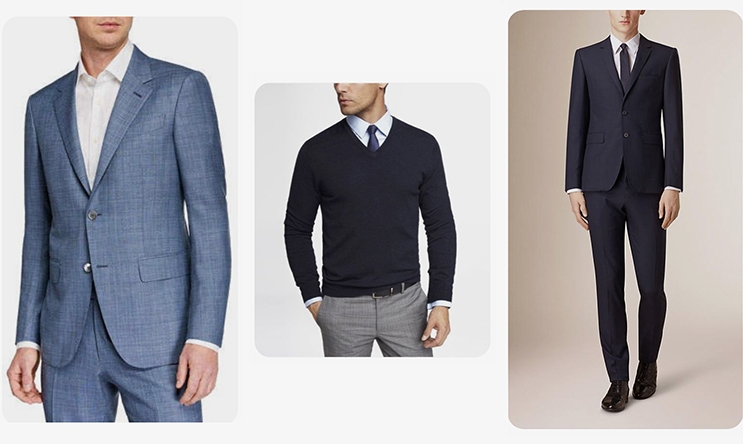
- Build a Wardrobe: Invest in essential pieces such as blazers, dress pants, and button-down shirts. Layering adds style without compromising professionalism—for example, a gray suit with a navy sweater and a button-down creates a polished look. In less formal settings, a sweater over a button-down with dress pants works well.
- Business Casual Options: Light-colored jackets or pants paired with or without a tie are ideal for smart casual interviews. This strikes a balance between formal and approachable.
- Formal Attire: For corporate or executive roles, a navy or charcoal suit paired with a neutral button-down and coordinating tie is a safe choice. Textured blazers can add sophistication and a unique touch.
- Colors and Patterns: Incorporate subtle colors or patterns to show personality. Bold-colored or patterned shirts work with neutral suits, and statement ties can add interest without being distracting. Avoid overly flashy ties or patterns.
- Simple & Classic: A classic gray or black suit with a coordinating tie and neutral shirt remains a reliable, professional option for any interview setting.
For more inspiration, see #JobInterviewOutfitsMen on social media.
Summer Interview Outfits
For a summer interview, choose lightweight, breathable clothing that still matches the employer’s dress code. Tailored trousers, chinos, professional skirts or dresses, collared shirts and blouses can all work; linen and lightweight cotton are practical options. Clean minimal sneakers may be appropriate in casual workplaces, while loafers, flats or dress shoes remain safer for formal and client-facing roles.
Avoid clothing that is visibly wrinkled, beachwear, flip-flops and anything that becomes uncomfortable when sitting for an extended period.
To find more inspiration, see #InterviewOutfitsSummer
Smart Casual Job Interview Outfits
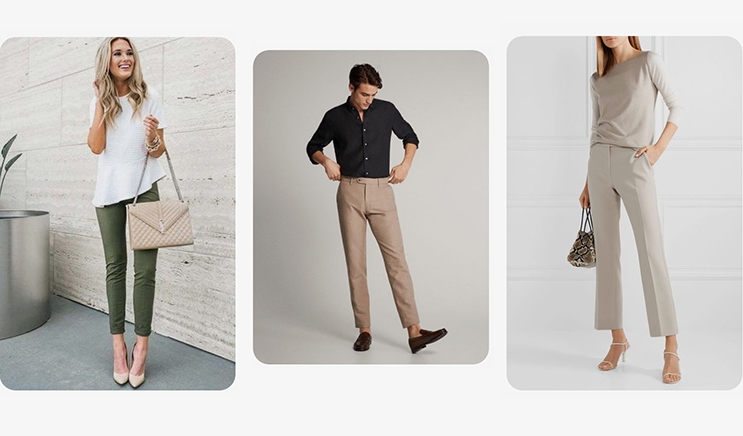
Smart casual is less formal than business casual but should still look intentional and polished. Choose smart casual only when the employer’s culture supports relaxed clothing.
A reliable outfit combines dark, well-fitting jeans or chinos with a button-down shirt, blouse, structured knit or plain T-shirt. Add a blazer, cardigan or sweater when more polish is appropriate. Finish with clean minimal sneakers, loafers, flats or boots, depending on the workplace and role.
Avoid ripped or faded jeans, graphic T-shirts, hoodies and visibly worn athletic shoes. If the company’s expectations are unclear, choose business casual or ask the recruiter.
Common Job Interview Outfit Mistakes
Avoid wrinkled, ill-fitting, or overly casual clothes like hoodies, ripped jeans, or flip-flops. Steer clear of loud colors, distracting patterns, excessive accessories, strong fragrances, and poor grooming. Even in relaxed work environments, aim for polished, professional attire that aligns with the company culture and keeps focus on your skills and qualifications.
Related: 30+ Common Job Interview Questions & Answers in 2026
Job Interview Outfits – FAQ
Is it better to overdress or underdress for an interview?
Dressing slightly more formally is generally safer when the employer’s expectations are unclear. A large mismatch can still feel out of place, so check company photos or ask the recruiter first.
Can I wear sneakers to a job interview?
Clean, minimal sneakers can work for casual startups, creative employers and some retail roles. Dress shoes, loafers or polished flats remain safer for corporate, client-facing and senior positions.
What should I wear when the recruiter says the dress code is casual?
Choose a polished version of casual rather than copying an employee’s everyday outfit exactly. Dark trousers or jeans with a collared shirt, blouse, structured knit or blazer usually provide the right balance.
What colors look best in a video interview?
Solid medium or neutral colors generally reproduce more cleanly on camera than small patterns or very bright shades. Test the complete outfit with the actual camera and lighting before the interview.
What should I wear to a retail, restaurant or skilled-trade interview?
Wear a clean, polished version of clothing appropriate for the workplace. Avoid arriving in dirty workwear, but do not wear a formal suit when it would show poor awareness of the job environment.
What can I wear if formal interview clothes are unaffordable or inaccessible?
Clean, well-fitting and role-appropriate clothing matters more than price or brand. Thrift stores, career closets and community clothing programs can provide low-cost interview options.
Should tattoos, piercings or religious clothing be covered for an interview?
Employer expectations differ, but candidates should not be advised to hide religious, cultural, disability-related or identity-related clothing as a universal rule. Safety requirements and genuinely job-related dress policies should guide any adjustment
- 25 Interview Questions for Managers With Answers
- How to Answer “What Are Your Salary Expectations?” [2026]
- How to Write a Resume With No Work Experience
- Elevator Pitch Examples for a Job Interview [2026]
- Phone Interview Questions to Ask the Interviewer
- Create an Effective Personal Development Plan in 7 Steps
 Privacy Protected
Get a Free Expert Resume Review
file here or click to upload
Thank You