Combination Resume Format: Examples & Templates (2026)
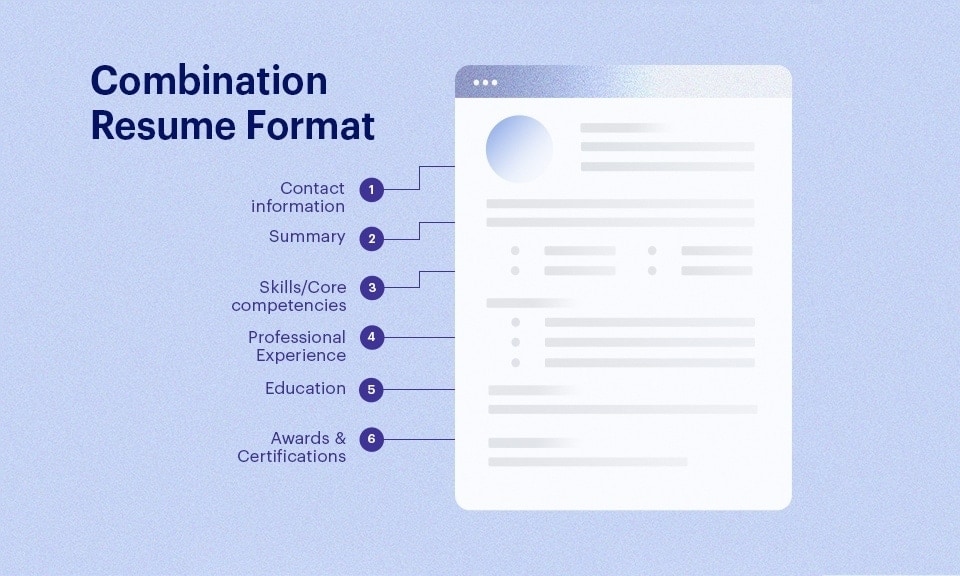
If you want a resume that balances skills and experience, the combination format is often the best choice. A combination resume (also called a hybrid resume) blends the strengths of functional and chronological formats by highlighting skills and achievements first, followed by a clear work history. It is one of the most effective resume formats in 2026 for candidates who want to showcase both skills and experience.
This guide explains what a combination resume is, when to use it, and how to write one step by step, including formatting best practices and real examples optimized for modern ATS systems.
What is a combination resume format?
A combination resume is a resume format that emphasizes skills and accomplishments while still including a reverse-chronological work experience section.
Combination resume format structure:
- Header & contact information
- Professional summary
- Skills section (grouped by category)
- Key accomplishments or highlights
- Work experience (reverse chronological)
- Education & certifications
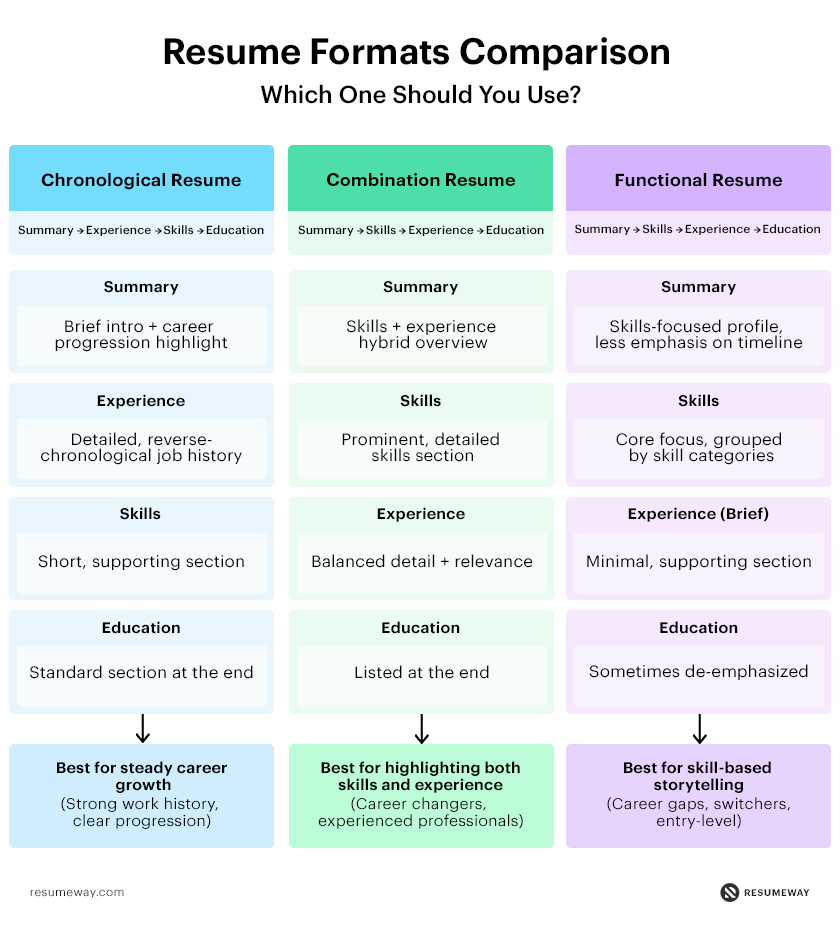
When to use a combination resume format?
A combination resume format is ideal when your skills matter as much as—or more than—your job titles.
Use a combination resume if you are:
- Changing careers or industries
- Returning to work after a gap
- A senior professional with diverse experience
- A freelancer or consultant with project-based work
- Applying for skill-driven roles (tech, marketing, product, operations)
Avoid this format if:
You’re an entry-level candidate with minimal experience or applying to companies that strictly require chronological resumes.
How to create a combination resume (step-by-step guide)
Start with a strong header
Use a clean, professional header with your full name, target job title, phone number, and professional email. Add a LinkedIn profile or portfolio link if relevant. Avoid full addresses, graphics, or icons to ensure ATS compatibility.
Write a compelling professional summary
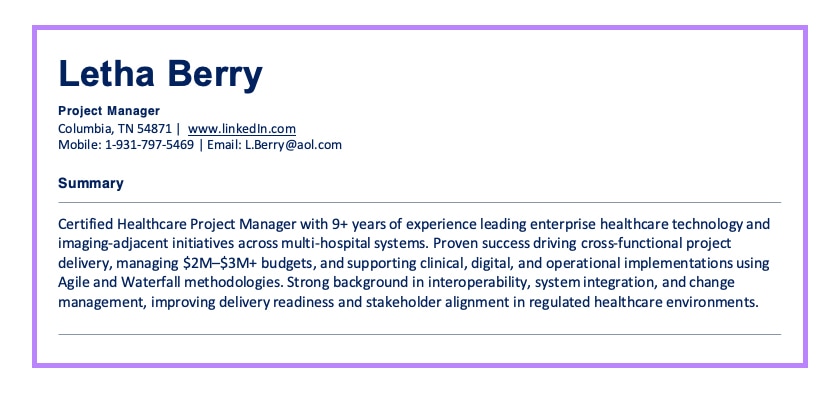
A compelling professional summary should be concise, targeted, and results-focused. Keep it to 3–5 lines (about 70 words) highlighting your job title, years of experience, and core skills.
Use role-specific keywords for ATS optimization and emphasize measurable achievements. Focus on how your expertise solves employer needs and delivers impact.
Related: Resume Objective Examples [+How-to Guide]
Create a detailed skills section
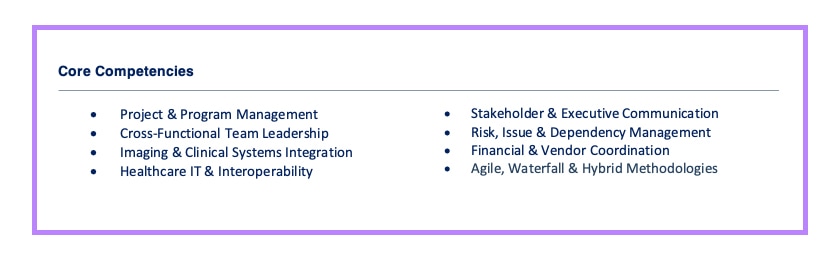
Create a well-structured skills (or core competencies) section by clearly separating core skills and technical skills. Group related abilities under clear summaries to improve readability and ATS scanning.
Prioritize job-specific keywords, balance hard and soft skills, and keep entries concise.
For management positions, technical skills can be listed separately under the work experience section.
Related: Skills to Put on Your Resume (With Examples)
List work experience in reverse chronological order
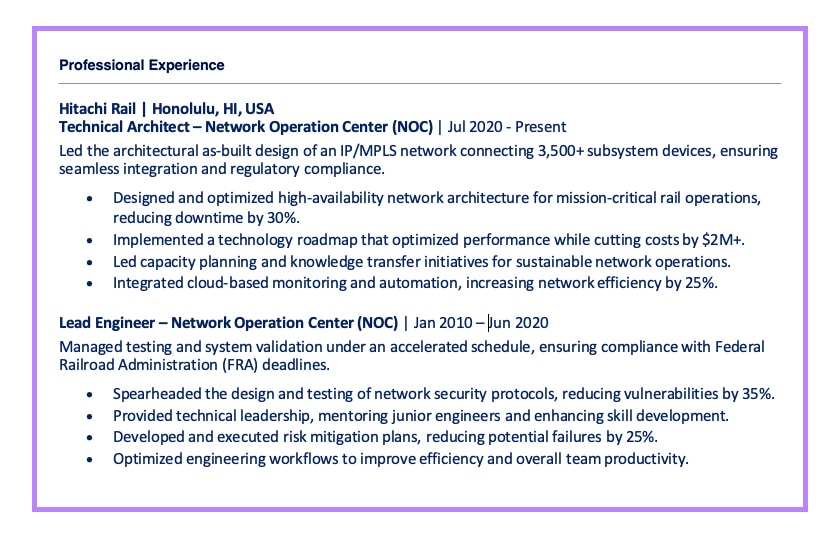
Start with your most recent role and work backward. For each position, include your job title, company name, location, and dates of employment.
Describe responsibilities and achievements in a results-oriented manner, emphasizing measurable outcomes and skills relevant to the target role. Use action verbs and quantifiable results such as percentages, numbers, or cost savings to demonstrate impact.
Aim to highlight 3 to 5 key achievements or responsibilities per role, showing both your contributions and the value delivered.
Related: How to Write Work Experience on a Resume: Examples & Tips
Add education & certifications
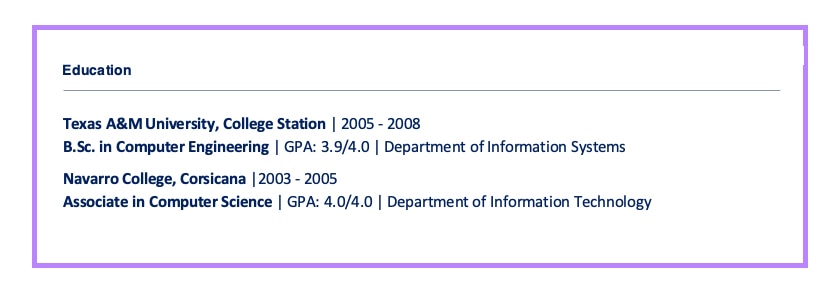
Include your degrees, institutions, and graduation years. List any relevant certifications prominently, especially those required or highly valued for the target role.
Optional sections: awards, projects, tools, languages
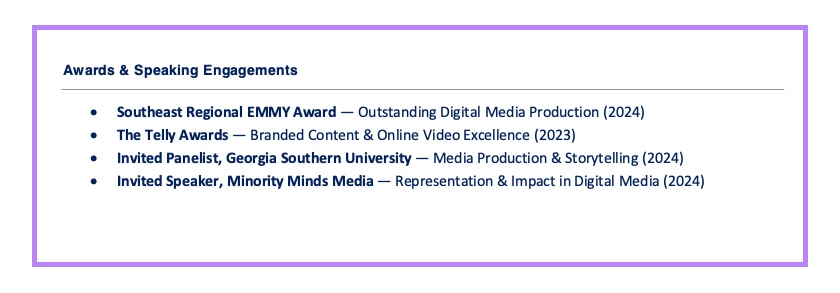
You may include awards or honors, key projects demonstrating your skills, and relevant tools or languages to strengthen your resume and showcase additional qualifications.
Related: How to Write Work Experience on a Resume: Examples & Tips
Combination resume layout, best practices
- Ideal Resume Length
One to two pages depending on experience. One page is best for early-career professionals, two pages for experienced or managerial roles. - Font, Whitespace, and Readability
Use clean, professional fonts like Calibri, Arial, or Helvetica, 10–12 points. Maintain consistent spacing, margins, and ample whitespace to enhance readability. - Modern ATS-Friendly Formatting Rules
Avoid graphics, tables, images, icons, and unusual symbols. Use standard headings such as Professional Summary, Skills, Work Experience, Education, and Certifications. Submit in PDF or Word format as preferred. - How to Organize Skills vs Experience
Lead with a professional summary, followed by a skills section separating core and technical skills. List work experience in reverse chronological order with measurable achievements. Education, certifications, and optional sections like awards, projects, tools, or languages follow.
Combination resume format examples
Combination Resume Example for Student
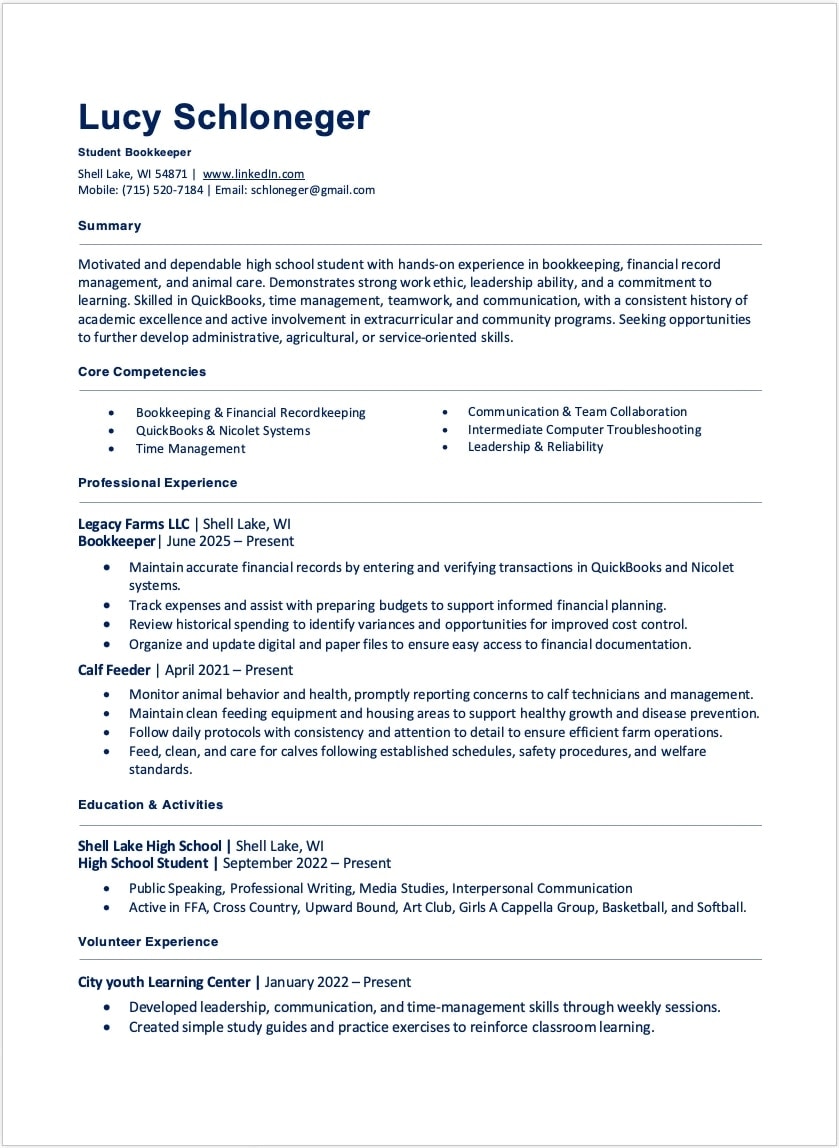
Why it works:
Although a chronological resume is usually best for high school students with limited skills or experience, Lucy’s hands-on bookkeeping experience makes a combination resume a better fit. By highlighting her skills first, this format allows her practical experience to stand out despite a shorter work history.
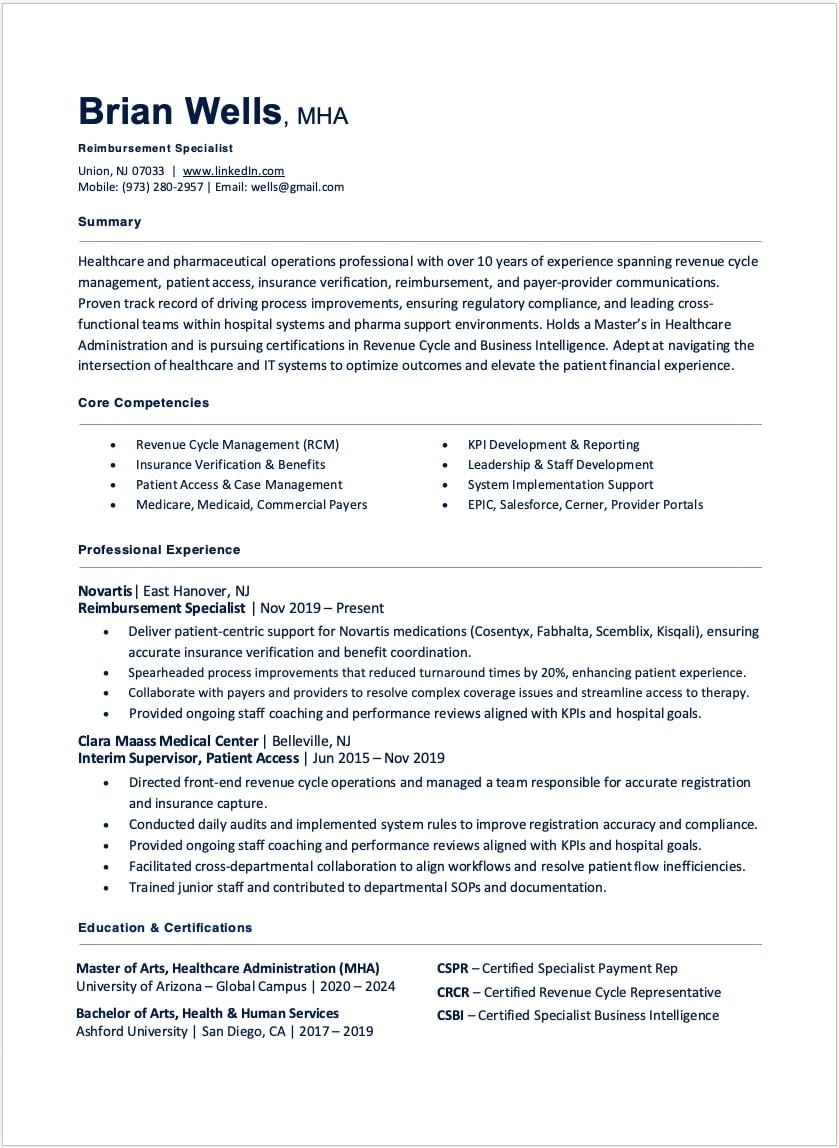
Combination Resume Example for Mid-Level Professionals
Why it works:
Recruiters expect mid- to senior-level candidates to bring substantial experience. A combination resume format is ideal at this stage because it emphasizes advanced skills and core competencies while still presenting a clear, credible work history.
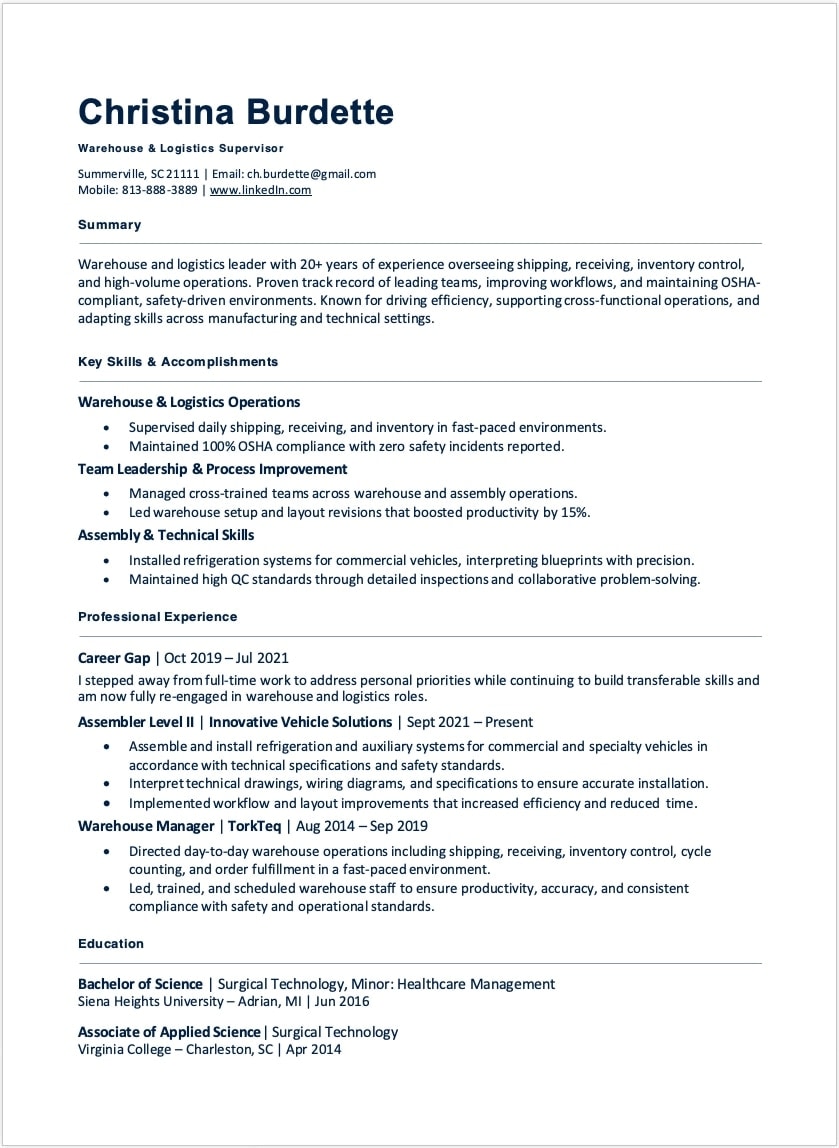
Combination Resume Example for Career Gap
Why it works:
For candidates with employment gaps, a combination resume highlights key skills and accomplishments upfront, drawing attention to qualifications while still providing a clear, transparent, and chronological work history.
Combination resume format templates
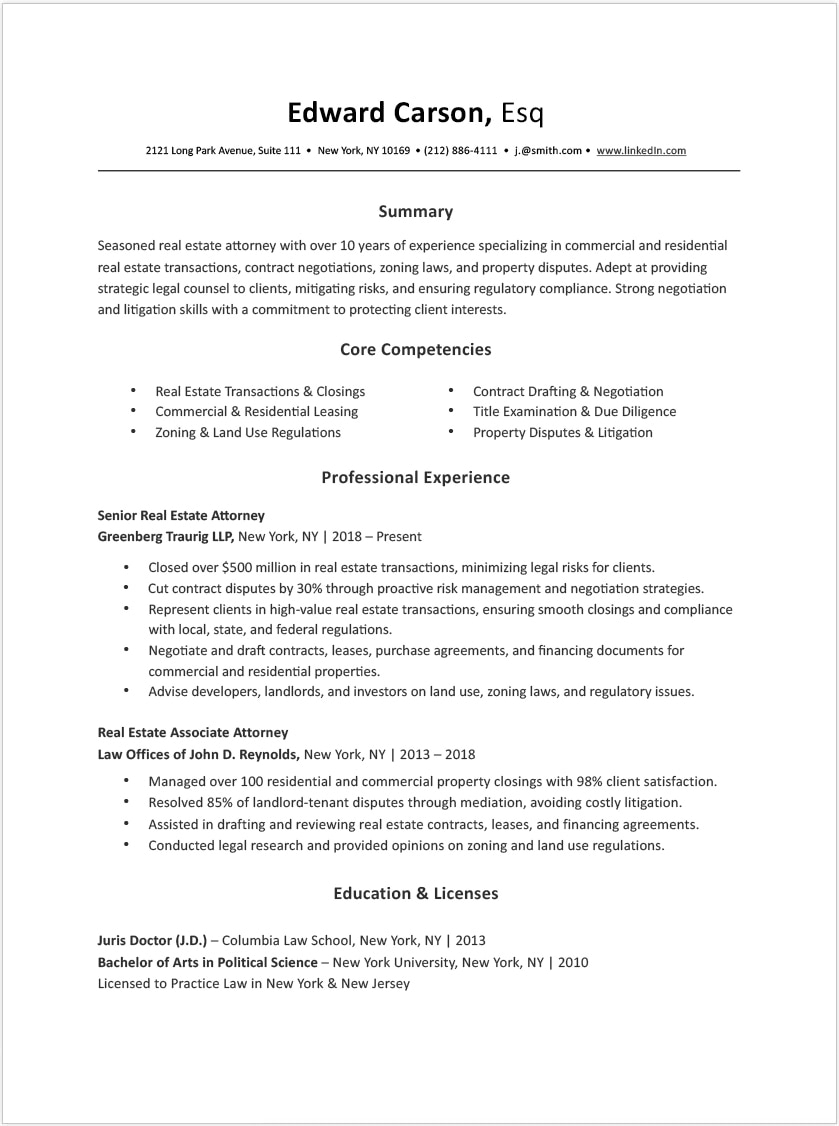
Combination Resume Example for Real Estate Attorneys
Why This Resume Works:
This combination resume highlights key real estate law skills first—such as contract negotiation, due diligence, and zoning compliance—then supports them with a clear work history. It helps hiring managers quickly see legal expertise, experience, and career progression, while remaining fully ATS-friendly.
Real Estate Attorney Resume Template
Download it here →
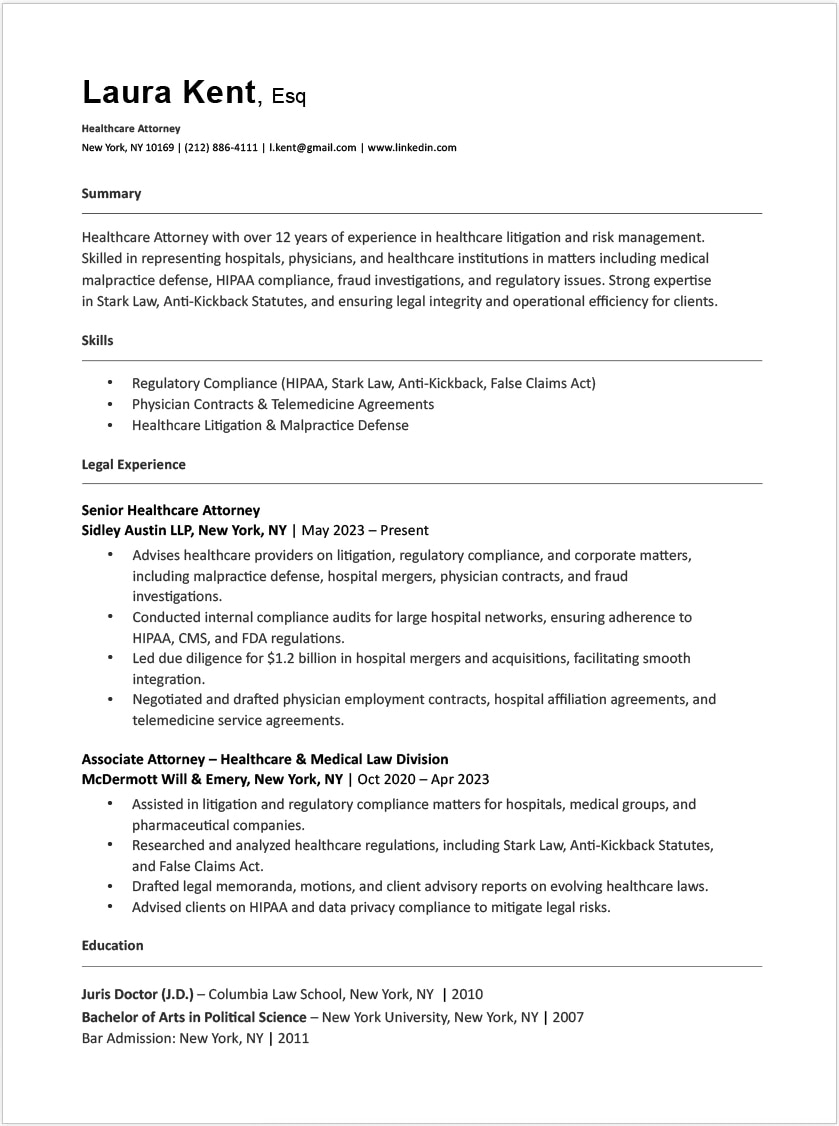
Combination Resume Example for Healthcare Attorneys
Why This Resume Works:
This resume puts healthcare compliance and regulatory skills front and center, followed by relevant legal experience. It’s ideal for attorneys working across healthcare, pharmaceutical, or clinical settings and clearly shows how legal expertise supports compliance, risk management, and operations.
Healthcare Attorney Resume Template 150130
Download it here →
FAQ: Combination Resume Format
What is the difference between combination and hybrid resume format?
There is no difference between a combination resume and a hybrid resume. Both refer to the same format that combines a skills-focused section with a chronological work history. “Hybrid” is simply a more modern term for the traditional “combination” resume.
Who should use combination resume?
A combination resume is well suited for career changers, professionals returning to work after a career gap, candidates in mid- to senior-level or diverse roles, freelancers or consultants, and applicants for skill-driven positionswhere competencies matter as much as job titles.
Is a combination resume good for career change?
Yes, a combination resume is often ideal for a career change because it allows candidates to highlight transferable skills and relevant competencies upfront while still providing a clear employment history, helping recruiters understand how past experience supports the new career direction.
Is a combination resume good for ATS?
Yes, a combination resume can be ATS-friendly if it uses a simple structure, standard headings, and relevant keywords. Avoid complex layouts, as they can make it harder for ATS systems to read your resume correctly.
What are the most common mistakes in a combination resume?
Common mistakes in a combination resume include overloading the skills section with vague or generic abilities, failing to link skills to measurable achievements, duplicating the same information in both the skills and work history sections, using an unclear or inconsistent structure, and omitting dates or job titles, which can hurt ATS compatibility.
Popular related posts:
- Cover Letter Format: A Step by Step Guide for 2026
- ATS-Friendly Resume: Templates & Writing Guide (2026)
- 41 Resume Tips to Make Your Job Application Stand Out
- How Long Should a Resume Be in 2026? [for Every Career Stage]
- How to Answer “What Are Your Salary Expectations?”
 Privacy Protected
Get a Free Expert Resume Review
file here or click to upload
Thank You